
Last Updated: September 27, 2026
How to Tell if Jewelry Is Durable: Key Inspection Points
Spotting durable jewelry means examining construction, metal quality, and finishing. Examine prongs, they should sit flush with no gaps and hold the stone firmly when gently wiggled. Check the band for cracks or thin spots, especially where the setting connects.
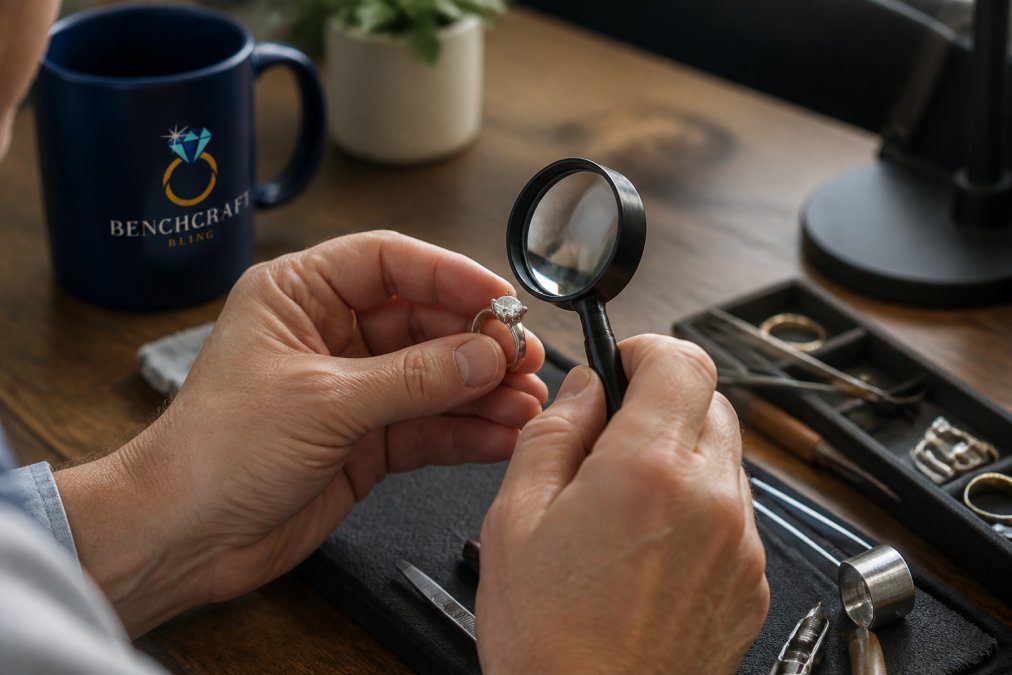
Look for hallmarks inside the band: "925" for sterling silver, "10K," "14K," or "18K" for gold.
Best Metals for Everyday Jewelry
Solid gold (14K or 18K) is most durable and won't corrode or tarnish. Continuum Sterling Silver (used in Benchcraft Bling pieces) is harder and hypoallergenic. Sterling silver requires maintenance, while stainless steel resists corrosion but scratches easily.
| Metal | Tarnish Resistance | Scratch Resistance | Best For |
|---|---|---|---|
| 14K Gold | Excellent | Very Good | Daily wear, heirlooms |
| Continuum Sterling Silver | Very Good | Very Good | Everyday jewelry |
| Traditional Sterling Silver | Good | Good | Occasional wear |
| Gold-Filled | Good | Good | Budget-conscious daily wear |
| Stainless Steel | Excellent | Fair | Active lifestyles |
Signs of Poor Jewelry Craftsmanship
Weak construction shows red flags: uneven or bent prongs, rattling stones, and visible solder joints.
How to tell if jewelry is durable: examine secure settings, quality metal, even finishing, and smooth surfaces. Benchcraft Bling pieces combine proper materials with meticulous durability. SHOP NOW →
