
Table of Contents
- Why Everyday Jewelry Fails Active Hands
- The Best Metal for Everyday Rings and Bands
- Durable Gemstone Settings for Active Lifestyles
- Safety and Ergonomics: Jewelry That Works With Your Hands
- Everyday Jewelry Maintenance Tips for 24/7 Wear
- Repair, Resizing, and the Long-Term Lifecycle
- Choosing Pieces That Mix, Match, and Move With You
- Frequently Asked Questions
Last Updated: September 16, 2026
Why Everyday Jewelry Fails Active Hands
Most jewelry isn't built for hands that actually work. Thin bands bend, prongs catch on fabric, and plated finishes wear through within months under constant friction, moisture, and impact. This guide from Benchcraft Bling breaks down what makes durable everyday jewelry for active hands hold up.
The Best Metal for Everyday Rings and Bands
The best metal for everyday rings has high hardness, corrosion resistance, and a hypoallergenic composition. For most active hands, that means 14k gold, surgical-grade stainless steel, or titanium rather than softer pure metals or plated alloys.
| Metal | Durability | Best For | Watch Out For |
|---|---|---|---|
| 14k gold | High | Daily wear, heirloom pieces | Softer than steel; scratches over time |
| 18k gold | Moderate | Dress wear, rich color | Bends more easily at 75% gold |
| Sterling silver | Moderate | Budget-friendly everyday wear | Tarnishes; needs polishing |
| Surgical-grade steel | Very high | Manual labor, 24/7 wear | Heavier feel; limited resizing |
| Titanium | Very high | Lightweight, sport-ready wear | Hard to resize; fewer style options |
Gold: 14k vs 18k for Daily Wear
14k gold outperforms 18k for daily wear because its alloy includes more hardening metals. At 58.3% gold, 14k balances precious metal content with the tensile strength a working hand needs; 18k, at 75% gold, delivers richer color but bends more easily. A common mistake is assuming higher karat means better durability, it's the opposite. For manual labor or continuous wear, 14k is the practical pick, and solid gold resists oxidation far better than plated finishes.
Sterling Silver, Titanium, and Surgical-Grade Steel
Sterling silver remains a popular everyday choice, though traditional sterling tarnishes and scratches more readily than gold. Newer alloys address this: Continuum Sterling Silver is harder than traditional sterling, bright white, nickel-free, and hypoallergenic. Titanium wins on weight and corrosion resistance, ideal for sport-ready wear, while surgical-grade stainless steel tops pure toughness and handles heavy manual labor without deformation.
Durable Gemstone Settings for Active Lifestyles
Bezel and low-profile settings are the most durable for active lifestyles because they surround the stone with metal instead of exposing it, eliminating the snag points that make prong settings risky for working hands.
Bezel and Low-Profile Settings vs. Prongs
Prong settings show more of the stone and let more light in, which is why they dominate engagement rings. They also catch on gloves, fabric, and tools, and each snag stresses the prongs until the setting loosens. Bezel settings trade a little sparkle visibility for security: the metal rim protects the stone's girdle, resists impact, and stays snag-free.
| Setting Type | Stone Security | Snag Risk | Best For |
|---|---|---|---|
| Bezel | Highest | Very low | Active hands, 24/7 wear |
| Low-profile bezel | Highest | Minimal | Manual labor, sport |
| Prong | Moderate | High | Dress wear, display |
Safety and Ergonomics: Jewelry That Works With Your Hands
Jewelry safety in active environments comes down to two things: keeping the piece from catching on equipment, and keeping it from injuring the wearer. The second risk is the one most buying guides skip.
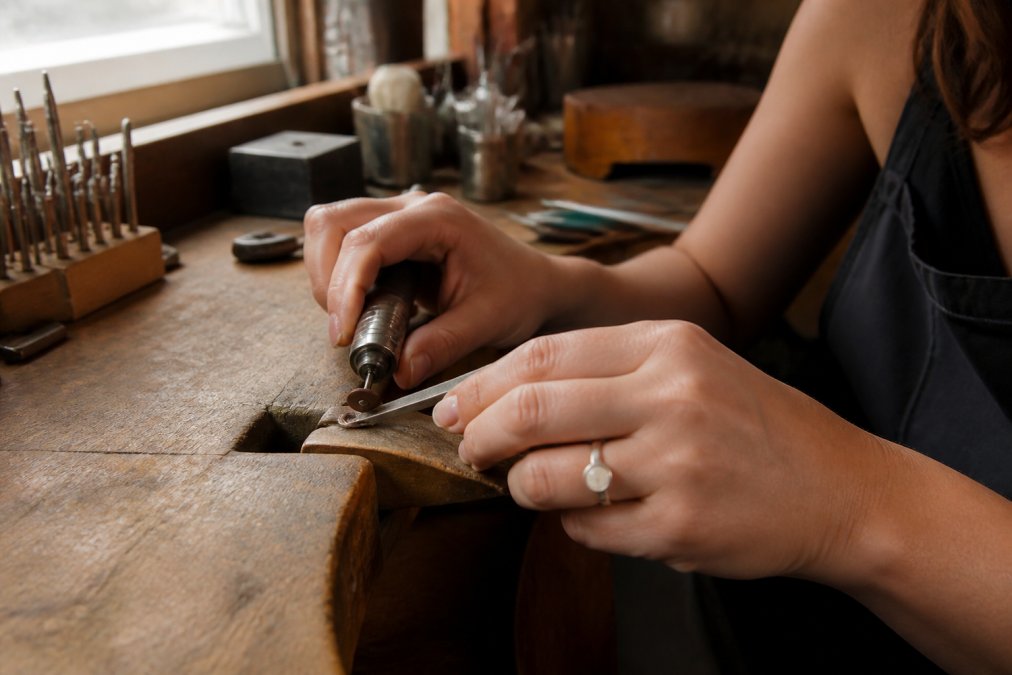
The Hazard Nobody Names: Ring Avulsion
Ring avulsion is a degloving injury that happens when a ring catches on a fast-moving object, a ladder rung, a conveyor edge, machinery, and the force pulls the finger with it. The ring acts as a hook, the metal doesn't give, and the soft tissue does. OSHA's machine-guarding standards exist precisely because caught-in and caught-between hazards are a leading category of workplace hand injuries.
Matching the Ring to the Trade
Generic "active lifestyle" advice doesn't help a nurse, a mechanic, and a fitness trainer, because their hands face different forces:
- Nurses and clinical staff. Frequent glove changes and hand sanitizer are the enemy. A smooth, low-profile band slides under exam gloves without tearing them, and a snug fit prevents rotation during patient handling. Avoid raised settings, they puncture gloves and trap sanitizer residue against the skin.
- Mechanics and machinists. Impact and snag risk dominate. A wide, smooth band in a hard alloy (surgical-grade steel or titanium) distributes impact better than a thin band, and a bezel setting eliminates the prong that would catch on a wrench or hot surface. If your shop requires bare hands, a silicone band is the only safe option.
- Fitness trainers and coaches. Sweat, chalk, and repeated gripping. Titanium's low weight keeps the ring from distracting during demonstrations, and its corrosion resistance shrugs off sweat that would dull a plated finish. A low-profile bezel keeps the stone from digging into a palm during kettlebell or barbell work.
- Trades with ladder and rope work. Snag risk is the whole story. A ring that catches on a rung or a rope under body weight is a serious hazard. A snug fit and a completely smooth exterior, no prongs, no engraving edges, reduce the catch points to near zero.
Ergonomics: Why Band Geometry Matters More Than Decoration
Ergonomics matter because a ring is a tool interface. A wide band distributes pressure across a larger area than a thin one, reducing the pinching and hot spots that show up after a long shift. A comfort-fit interior, slightly rounded on the inside edge, slides over the knuckle without the sharp edge that irritates during repeated gripping.
Fit: The Rule Most People Get Wrong
A common mistake is sizing a working ring too loose. A ring that spins freely catches more often and slides off during physical tasks, its own hazard in a machine shop or on a ladder. A snug, comfortable fit keeps the piece in place without restricting circulation. If you can shake your hand hard and the ring stays put, the fit is right; if it leaves a mark or feels tight after an hour, it's too small.
Everyday Jewelry Maintenance Tips for 24/7 Wear
Everyday jewelry maintenance for 24/7 wear is mostly about consistency, not effort. A few minutes a week prevents the tarnish, buildup, and loosening that shorten a piece's life.
The Mechanism: Why Buildup Is the Real Enemy
The thing nobody tells you about 24/7 wear is that moisture is the quiet enemy, and the damage is mechanical, not just cosmetic. Soap, sweat, lotion, and hand sanitizer collect under a band and around settings. That mildly abrasive residue does two things:
- It dulls the finish. Residue trapped against the metal holds grit that micro-scratches the surface every time the ring moves. A polished band that looks hazy after a year is usually a buildup-and-grit problem, not a metal problem.
- It loosens settings. Soap film works into the gap between a prong and the stone. As it dries and re-wets, it acts like a slow wedge, lifting the prong a fraction of a millimeter at a time, which is why a ring can feel secure for months and then lose a stone with no obvious impact.
The Weekly Routine
- Remove rings before heavy tasks, especially anything with impact or chemicals
- Wipe pieces with a soft, lint-free cloth after exposure to sweat, lotion, or cleaning products
- Rinse with warm water and a drop of mild dish soap, then scrub gently with a soft-bristle toothbrush, pay attention to the underside of the band and the gap around any stone
- Dry fully with a soft cloth before wearing; never store a damp piece
- Check settings monthly by gently pressing the stone side to side to confirm it doesn't move
- Store pieces separately in a soft pouch or lined box to prevent metal-on-metal scratches
- Schedule a professional inspection once a year for pieces worn daily
The Monthly Inspection: What to Actually Look For
A setting check is more than pressing the stone. Most practitioners recommend a quick visual pass under bright light for three things:
- Prong tips. Look for a prong that sits higher or lower than its neighbors, or a gap between the prong tip and the stone. A lifted prong is the earliest warning sign of a loose stone.
- Band thinning. Hold the ring up to a light and compare the band's thickness at the bottom to the top. Visible thinning means it's time for a professional check before the band cracks.
- Surface scratches. Light scratches are normal and can be polished out. Deep gouges that catch a fingernail are structural and worth a jeweler's eye.
Cleaning by Metal: What's Safe and What Isn't
The routine above works for gold, sterling silver, titanium, and surgical-grade steel. A few metal-specific cautions:
- Sterling silver tarnishes from sulfur compounds in the air and on skin. A silver polishing cloth handles light tarnish; avoid abrasive polishes that remove metal along with the tarnish.
- Titanium and surgical-grade steel are essentially maintenance-free for cleaning, but their hardness means scratches can't be polished out at home, leave that to a jeweler.
- Any plated piece should never be scrubbed. Plating is measured in microns, and a soft-bristle brush can wear through it at contact points. If a piece is plated, it isn't a 24/7 piece, the plating will fail first, regardless of care.
Skin Sensitivity: The Alloy Is Usually the Culprit
For skin sensitivity, nickel-free and hypoallergenic alloys reduce irritation that plated or nickel-containing metals cause. If a piece irritates your skin, the alloy is usually the culprit, not the fit, but a ring that traps soap residue will irritate even in a hypoallergenic metal, which is why the rinse-and-dry step matters.
Repair, Resizing, and the Long-Term Lifecycle
Durable jewelry is designed to be maintained, not replaced. Hard metals resist damage but complicate resizing: titanium and surgical-grade steel are difficult to resize because of their strength, while gold and sterling silver resize more easily. That's a real trade-off at purchase, if your ring size might change, a resizable metal saves you from replacing the piece later.
Choosing Pieces That Mix, Match, and Move With You
Versatility is the quiet advantage of well-built jewelry. A durable piece in a neutral metal and low-profile setting works with what you already own, casual to formal, so you actually wear it instead of saving it for special occasions. This is where Benchcraft Bling's approach makes sense for active hands: the collection is designed to mix, match, and move with you, and each piece is handcrafted by a master bench jeweler with over 40 years of experience. Options like the [2 ct.
Frequently Asked Questions
What metal is most durable for everyday jewelry?
Surgical-grade stainless steel and titanium rank highest for scratch and corrosion resistance, while 14k gold offers a strong balance of durability and appearance. Continuum Sterling Silver, used in Benchcraft Bling rings, is harder than traditional sterling and is nickel-free and hypoallergenic. For active hands, look for metals with high tensile strength and tarnish-resistant properties. Solid gold outperforms plated options over time because the alloy composition runs through the entire piece rather than sitting on the surface.
Can you wear fine jewelry while working out or doing manual labor?
Yes, if the piece is designed for it. Low-profile bezel settings sit flush against the finger, so they are snag-free and less likely to catch on equipment or fabric. Waterproof and sweat-proof metals like titanium, surgical-grade stainless steel, and solid gold handle moisture without oxidation. Remove rings with high prongs or tension settings before heavy lifting, since impact can loosen stones. For manual trades, a smooth wide band or cuff-style piece is the safest everyday choice.
What are the best gemstone settings for active lifestyles?
Bezel settings are the most secure option because the metal wraps entirely around the gemstone edge, protecting it from impact and snags. Low-profile settings keep the stone close to the band, reducing the chance of catching on gloves, tools, or clothing. Tension settings look striking but rely on metal pressure alone, which makes them a poor fit for manual labor. For anyone searching for durable gemstone settings for active lifestyles, bezel-set lab diamonds in sterling silver or gold are a practical, long-lasting pick.
How do I keep my jewelry from getting scratched during daily activities?
Store pieces separately in soft pouches or a lined box so they do not rub against each other. Take rings off before tasks that involve abrasive materials, like gardening or sanding. Wipe metal with a soft cloth after exposure to sweat, lotion, or cleaning products to prevent buildup. For everyday jewelry maintenance tips, a quick weekly rinse in warm water with mild soap keeps tarnish-resistant metals bright. Check settings every few months for looseness, and have prongs tightened by a jeweler before a stone works free.
Hands that work deserve jewelry that keeps up. If you're tired of replacing pieces that bend, tarnish, or lose stones, Benchcraft Bling builds for the long haul: handcrafted fine jewelry with 40+ years of bench experience behind it, bezel-set lab diamonds, and nickel-free Continuum Sterling Silver designed to mix, match, and move with you. Get started with Benchcraft Bling and wear jewelry made for every moment, not just the special ones.