
Table of Contents
- What Makes a Lab Diamond Ethical?
- Certification and Authenticity Verification
- How to Choose a High Quality Lab Diamond
- Lab Grown Diamonds vs Mined Diamonds
- Are Lab Grown Diamonds Sustainable?
- Where to Buy Ethical Lab Diamonds: What to Look For
- Cost Savings and Transparent Pricing on Lab Diamonds
- Frequently Asked Questions
Last Updated: September 14, 2026
What Makes a Lab Diamond Ethical?
A lab diamond is ethical when it is created in a controlled facility with verifiable documentation, clear origin tracking, and no connection to conflict financing or forced labor. Ethics rests on evidence, not marketing.

Three factors decide whether a stone earns that label:
- Traceable origin. The grower, cutting facility, and grading lab are documented from start to finish.
- Independent certification. A gemological laboratory grades the stone and issues a report tied to its unique identification number.
- Honest disclosure. The seller states plainly that the stone is lab-grown, and prices it accordingly.
This guide from Benchcraft Bling shows how to verify each one: read a grading report, compare lab-grown to mined, and spot sellers who wave "ethical" around without paperwork.
Certification and Authenticity Verification
Certification is the most reliable signal that a lab diamond is what the seller claims. Two laboratories dominate: the International Gemological Institute (IGI) and the Gemological Institute of America (GIA). Both grade cut, color, clarity, and carat weight, and issue a report with a unique number you can verify on the lab's website (gia.edu).

What most guides miss is that the report matters less than the match. A certificate for a 1-carat round brilliant proves nothing if the stone in the setting is different. Ask for the report number before purchase and confirm the laser inscription on the girdle matches it.
The GIA's guidance on diamond grading reports explains what each section of a report covers, which helps you spot a document that has been altered or reused.
How to Read a Grading Report
A report is a set of measurements, not a single grade. Focus on:
- Report number. The unique identifier. Confirm it returns a result on the lab's own lookup tool, not a third-party site.
- Measurements and proportions. Table percentage, depth percentage, and crown/pavilion angles determine how light performs. A report can grade "Excellent" cut while proportions sit at the edge of the range.
- Clarity characteristics. The report names and often plots inclusions. A VS1 stone with a single feather near the girdle behaves differently from one with clouds spread through the table.
- Fluorescence. Usually "None" or "Faint" for lab-grown stones. Strong fluorescence can affect appearance in some lighting.
- Inscription. The report states what is laser-inscribed on the girdle, typically the report number and "LAB GROWN." Verify it under magnification.
Verifying the Ethical Claim, Not Just the Stone
A grading report proves the stone is a diamond, not that it was grown or sourced ethically, a separate verification where most buyers get stuck.
Look for third-party audit certifications covering the supply chain, not just the gem. The SCS-007 certification, developed by SCS Global Services, is the most widely recognized standard for lab-grown diamonds, grading a producer on sustainability and origin traceability. A seller claiming ethical sourcing should name the standard their supplier is audited against, and the audit should be current.
Ask directly:
- Which third-party standard covers your supplier's growing facility?
- Can you provide the audit certificate or a link to it?
- Is the certification for the grower, the cutter, or the retailer?
A seller who cannot answer these is relying on the word "ethical" as marketing, not as a verified claim.
Matching the Stone to the Paperwork
Before purchase, request the report number in writing. On delivery, confirm three things: the laser inscription matches the report number, the stone's measurements match the report, and the metal composition matches what was advertised. If any is off, the piece is not what you paid for.
How to Choose a High Quality Lab Diamond
Quality in a lab diamond comes down to the same four measurements used for mined stones, plus one factor specific to lab-grown production. Get the proportions right and the stone performs; get them wrong and no certificate will save the sparkle.

The 4Cs: Cut, Color, Clarity, Carat Weight
Cut governs brilliance, fire, and scintillation. It is the only one of the 4Cs controlled by human hands rather than nature, and it carries the most weight in how a stone looks. An excellent cut in a slightly lower color grade beats a poorly cut stone every time.
Color runs from D (colorless) to Z. For lab-grown stones, D through G reads as white to the naked eye in most settings; below that, warmth starts to show, particularly in larger stones.
Clarity measures internal inclusions. VS1 through SI1 is the practical sweet spot: eye-clean in nearly all cases and noticeably cheaper than the VVS range.
Carat weight is size, and it is where lab-grown stones change the math most. Buyers who could afford a half-carat mined stone often find a full carat within reach.
The fifth factor is growth method. Stones grown by chemical vapor deposition (CVD) and high-pressure high-temperature (HPHT) can both be excellent, but they behave differently under certain lighting and respond differently to repair work. A qualified jeweler will know which method produced your stone.
Lab Grown Diamonds vs Mined Diamonds
Lab grown diamonds and mined diamonds are chemically, physically, and optically identical: pure crystallized carbon with the same hardness (10 on the Mohs scale), refractive index, and thermal conductivity. Even a trained gemologist cannot separate them by eye or standard loupe.
The differences sit outside the stone itself:
| Factor | Lab Grown | Mined |
|---|---|---|
| Origin | Grown in a facility over weeks | Extracted from the earth |
| Supply chain | Documented from reactor to retailer | Often crosses multiple borders |
| Certification | IGI or GIA report, same standards | IGI or GIA report, same standards |
| Resale market | Thin and still forming | Established but illiquid |
| Care requirements | Identical | Identical |
Resale deserves a straight answer. Mined diamonds have a resale market, but it is not the investment most buyers imagine; sellers typically recover a fraction of retail. Lab-grown stones resell for less still, because new stones keep getting cheaper to produce. Buy a diamond to wear, not to appreciate.
Are Lab Grown Diamonds Sustainable?
Lab-grown diamonds avoid the large-scale land disturbance, open-pit excavation, and community displacement that define extracted stones, a real, measurable advantage. But "sustainable" is a claim, not a category, and the honest answer depends on data most sellers never publish.
The Lifecycle View: What Actually Drives the Footprint
A credible environmental comparison looks at four stages, not one:
- Growth. Producing a diamond in a reactor consumes substantial electricity, so a grown stone's carbon footprint is dominated by how that electricity is generated. A facility on a low-carbon grid produces a dramatically lighter stone than one on a coal-heavy grid, same stone, very different footprint.
- Cutting and polishing. This stage is labor- and energy-intensive and often outsourced, so a stone's environmental profile can shift after it leaves the reactor. Ask where the stone was cut, not just grown.
- Setting and metal. The metal is often the heavier environmental load by mass. Recycled gold and responsibly sourced precious metals reduce the mining burden of the setting, so a brand's metal sourcing matters as much as its stone sourcing.
- Transport and packaging. Air freight and single-use packaging are small but non-zero contributors. A seller who ships carbon-offset or consolidates shipments is doing measurable work here.
Why You Rarely See Numbers
Most sellers do not publish grid mix, energy source, or a lifecycle assessment because the data is inconvenient and inconsistent across growers. The ones who do deserve credit, and their claims should be specific enough to check. A vague "eco-friendly" or "sustainable" label without substantiation is not just unhelpful; under the Federal Trade Commission's Green Guides, deceptive environmental claims are a compliance problem, and the FTC has brought enforcement actions over unqualified green marketing.
How to Verify a Sustainability Claim
Ask these questions before you buy. Sellers who can answer them are rare and worth your business:
- Which grid or energy source powers the growing facility?
- Is the stone's carbon footprint third-party verified, or self-reported?
- What percentage of the metal in the setting is recycled?
- Is the packaging plastic-free or offset?
The Bottom Line
Lab-grown diamonds are generally the lighter choice on land use, water use, and community impact. On carbon, the answer depends on the grid, and the only way to know is to ask. Treat "sustainable" as a question to verify, not a label to trust.
Where to Buy Ethical Lab Diamonds: What to Look For
Buy ethical lab diamonds from a seller who publishes certification numbers, states the stone's origin, and prices transparently. Everything else is decoration.
Run this checklist before you buy:
- Grading report from IGI or GIA, with a number you can verify yourself
- Laser inscription on the girdle that matches the report
- Clear statement of growth method (CVD or HPHT)
- Metal composition disclosed in full, including whether gold is recycled
- Return window and warranty terms in writing
- Insured shipping with tracking
- A named jeweler or gemologist you can ask questions before purchase
Certified Loose Diamonds and Finished Jewelry
Loose stones give you the most control: pick the exact stone, verify the report, choose a setting separately. Finished jewelry is faster and usually better value, since the maker absorbs the cost of matching stone to mounting. Either route works if the certification travels with the finished piece.
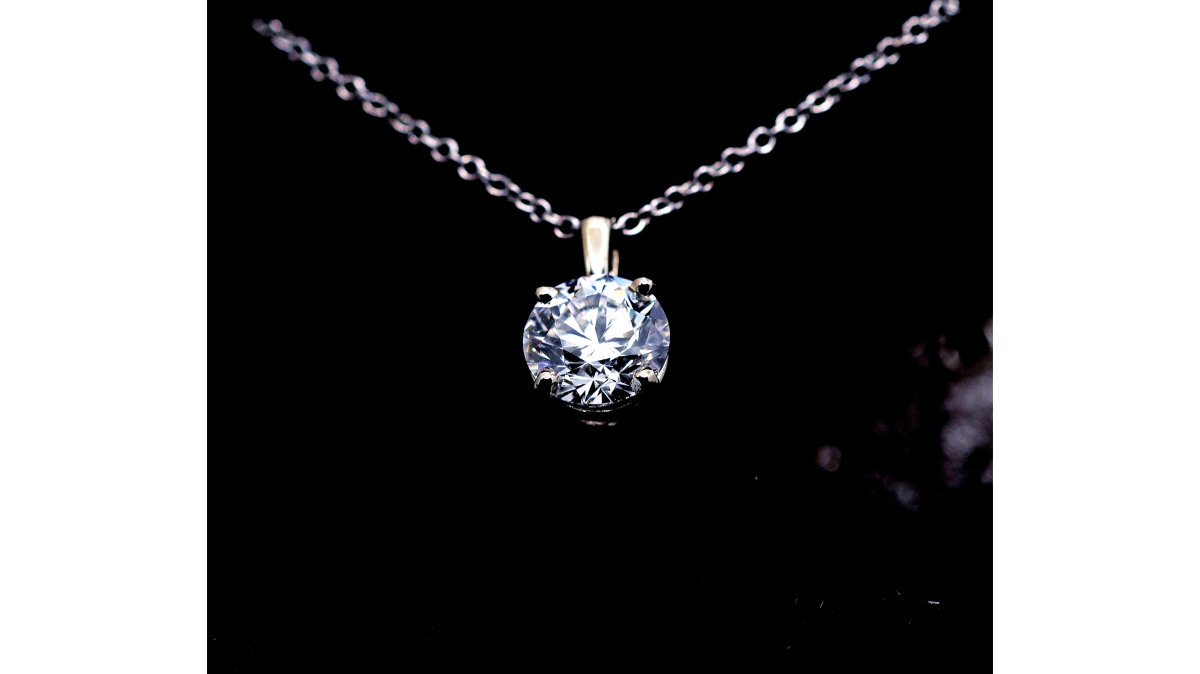
This is where Benchcraft Bling operates differently from a typical drop-ship operation. Every piece is handcrafted by a master bench jeweler with over 40 years of experience, and lab-grown stones arrive with certification attached. A certified 1ct round lab diamond solitaire in a sterling silver bezel setting ships with the documentation you need to verify the stone yourself. The bezel also matters for daily wear: it holds the diamond in a continuous rim of metal rather than exposing the girdle to knocks.
For buyers who want the stone and the craftsmanship verified together, that combination is hard to beat.
Cost Savings and Transparent Pricing on Lab Diamonds
Lab-grown diamonds cost meaningfully less than mined stones of comparable size and grade, and the gap widens as carat weight climbs. The savings come from production, not lower quality: a 1-carat lab diamond and a 1-carat mined diamond with the same cut, color, and clarity grade are the same stone in every measurable way.
That savings is only real if pricing is transparent. Watch for these patterns:
- Bundled pricing that hides the stone cost inside a single "from" figure
- Grade inflation where a stated color or clarity does not match the report
- Fee stacking on sizing, certification copies, or shipping added at checkout
Benchcraft Bling sizes rings to order at no additional charge, removing a common surprise fee. Earrings start at $124 for a 1-carat total weight pair in Continuum Sterling Silver, a tarnish-resistant alloy harder than standard sterling and hypoallergenic, and studs in solid 14K white gold run $389 to $749 depending on total carat weight. A 1ct lab diamond solitaire necklace in 14K white gold cable chain is $998, and a heart-shaped half-carat pendant in 14K white gold is $749.
| Piece | Stone | Metal | Price |
|---|---|---|---|
| Stud earrings, 1 ct TW | Lab diamonds | Continuum Sterling Silver | $124 |
| Stud earrings, 1/2 ct TW | Lab diamonds | 14K white gold | $389 |
| Stud earrings, 1 ct TW martini | Lab diamonds | 14K white gold | $489 |
| Stud earrings, 2 ct TW | Lab diamonds, certified | 14K white gold | $749 |
| Heart pendant, 1/2 ct | Lab diamond | 14K white gold | $749 |
| Solitaire ring, 1 ct | Certified lab diamond | Continuum Sterling Silver | $720 |
| Solitaire ring, 1 ct | Lab diamond | 14K yellow gold | $998 |
| Solitaire necklace, 1 ct | Lab diamond | 14K white gold | $998 |
The hard part of buying ethical lab diamonds was never finding a stone. It is finding a seller who will show you the paperwork, name the metal, and stand behind the work after the sale. Benchcraft Bling builds every piece by hand, ships certified lab-grown stones with documentation attached, and sizes rings to order at no extra cost, so you can verify what you are buying before it arrives. Get started with Benchcraft Bling and own a piece you can trace from stone to setting.
SHOP NOW →
Frequently Asked Questions
Are all lab-grown diamonds considered ethical?
Not automatically. Lab-grown diamonds avoid mining, but ethical sourcing also depends on the grower's energy use, labor practices, and transparency. Ask for IGI or GIA certification and documentation that traces the stone's origin. A certificate proves the diamond is lab-grown; it does not verify working conditions or renewable energy use at the facility. Buy from sellers who publish sourcing details and answer questions about their supply chain directly.
How can I verify if a lab-grown diamond is ethically sourced?
Start with the certificate. An IGI or GIA report confirms the stone is lab-grown and grades its 4Cs. Next, ask the seller for the grower's name and location. Reputable sellers provide this without hesitation. Look for written claims about renewable energy or recycled materials, and check whether the seller offers insured shipping and a clear return policy. If a seller cannot explain where the stone came from, treat that as a red flag.
What certifications should I look for when buying lab diamonds?
Look for grading reports from the International Gemological Institute (IGI) or the Gemological Institute of America (GIA). Both are independent gemological laboratories that verify a stone is lab-grown and grade its cut, color, clarity, and carat weight. The report number should match the stone and be verifiable on the lab's website. Some sellers also include an appraisal for insurance purposes. Always keep the original certificate with your purchase.
Are lab-grown diamonds cheaper than mined diamonds?
Yes, significantly. Lab-grown diamonds typically cost 30-50% less than mined diamonds of comparable size and quality. That gap comes from lower production costs, not lower quality. A 1-carat lab diamond solitaire ring, for example, can start around $720, while a similar mined stone would cost considerably more. The savings let buyers put more budget toward a higher color grade, better clarity, or a larger carat weight.
Do lab-grown diamonds hold their value?
Lab-grown diamonds have lower resale value than mined diamonds, mainly because production costs keep falling and supply keeps growing. Treat a lab diamond as a wearable purchase, not an investment. If resale matters to you, buy a piece you plan to keep and wear daily. The value is in the craftsmanship, the setting, and the enjoyment of the stone, not in future resale.