
Last Updated: October 17, 2026
How to Verify Lab-Grown Diamonds: Start With Certification
To verify lab-grown diamonds, the fastest way is to check the grading report from a gemological laboratory.
A grading report lists carat weight, color, clarity, and cut grades, plus a report number laser-inscribed on the girdle that ties the stone to its documentation.
To verify authenticity, match the report number on the stone with the certificate, then look it up free on the issuing laboratory's website.
At Benchcraft Bling, every lab-grown diamond comes certified.

Identifying Lab-Grown Diamonds With Laser Inscriptions
Laser inscriptions are tiny markings etched onto the diamond's girdle containing the report number and often identifying it as lab-grown.
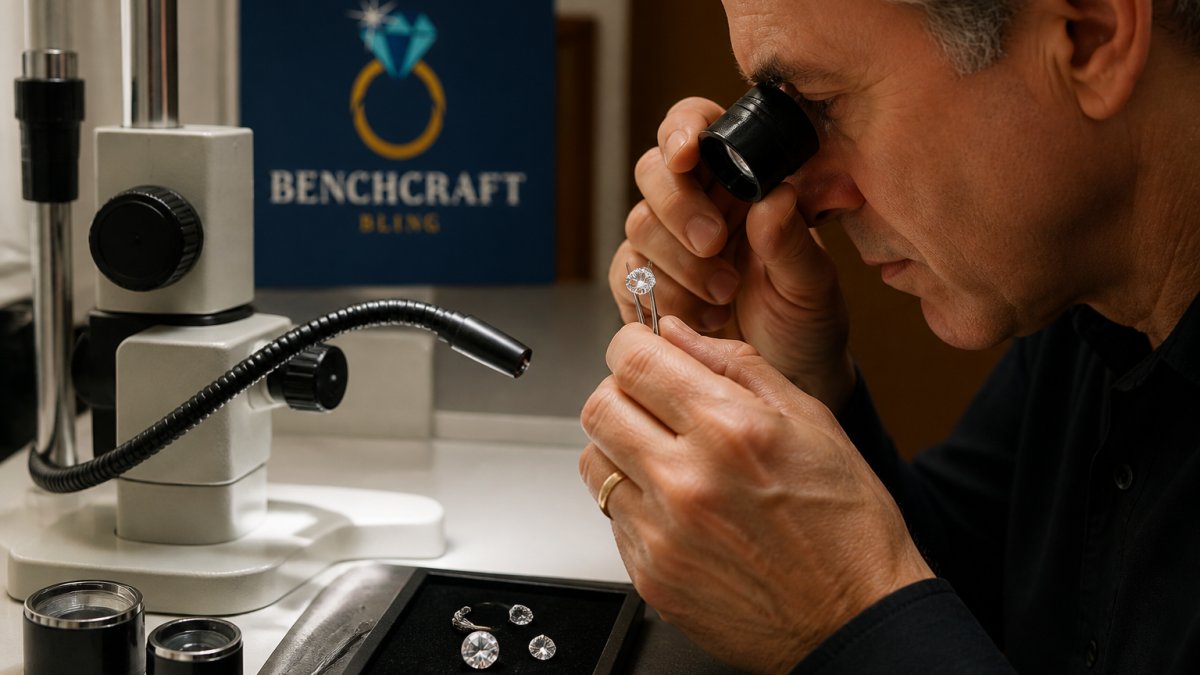
The marking links the diamond to its grading report and proves it was professionally graded.
Inspect it with a jeweler's loupe or microscope; the report number must match the certificate exactly.
Lab-grown diamonds typically display origin inscriptions; natural diamonds may have different inscriptions or none.
What a Lab-Grown Diamond Tester Can and Cannot Do
Consumer diamond testers measure thermal or electrical conductivity to distinguish lab-grown diamonds from cubic zirconia and other simulants, but they cannot reliably distinguish lab-grown from natural diamonds.
These $50-$200 handheld devices test conductivity; since lab-grown and natural diamonds conduct similarly, results are often inconsistent.
Professional labs use spectroscopy and imaging to detect differences in growth patterns and nitrogen content, definitively identifying a lab-grown diamond (gia.edu).
If a seller claims a basic tester proves their stone is lab-grown, request professional certification instead.
When buying lab-grown diamonds, certification removes all doubt. Benchcraft Bling's handcrafted pieces feature lab-grown diamonds with complete grading reports and laser-inscribed identifiers. Each stone is verified by professional gemological standards, ensuring you receive exactly what you purchase. The Gemological Institute of America's diamond grading standards set the industry baseline for this verification process. Explore Benchcraft Bling's certified lab-grown diamond collection and shop with confidence knowing every piece is authenticated and built to last.