
Last Updated: October 5, 2026
Is Handcrafted Jewelry Worth the Price? What You Actually Pay For
Handcrafted jewelry is made by hand, one piece at a time, by a trained jeweler rather than on an assembly line.
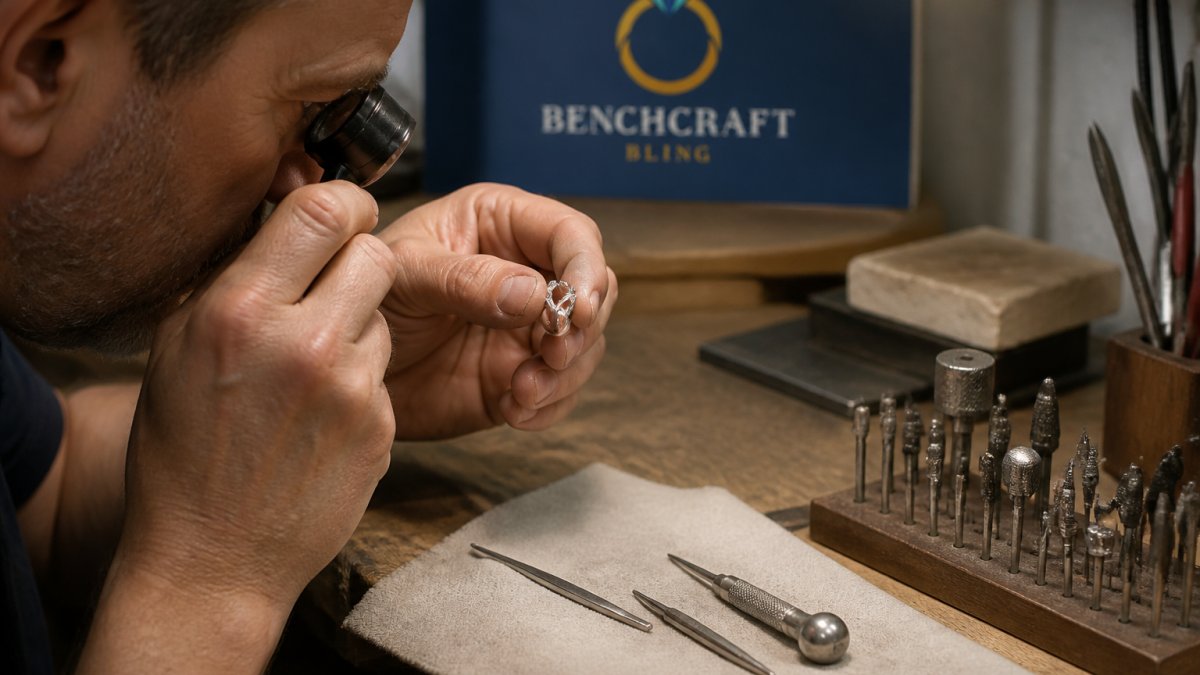
A $38 pair of handcrafted sterling silver drop earrings from Benchcraft Bling and a mass-produced pair at a similar price are not the same object: one was assembled by a person who checked the solder joint, the other came off a line turning out thousands per day.

- Labor hours. A single ring can take two to six hours of bench work.
- Material purity. Sterling silver is stamped .925; plated pieces carry far less precious metal.
- Stone selection. An artisan picks each stone by hand.
Handmade Jewelry vs Mass-Produced Jewelry: Materials, Labor, and Construction
Handmade and mass-produced jewelry differ in metal purity, how settings are secured, and how many pieces are inspected before shipping.
Construction. Check solder joints, band thickness, and whether prongs sit flush; hand-finished pieces usually show tighter joints and thicker metal at stress points.
| Factor | Handcrafted | Mass-Produced |
|---|---|---|
| Metal purity | Often sterling silver (.925) or solid gold | Often plated base metal |
| Stone setting | Hand-set, tension checked individually | Press-set in batches |
| Band thickness | Thicker at stress points | Thinner to save material |
| Inspection | Per piece | Per sample |
| Repair options | Resizable, re-tippable | Often not repairable |
| Cost per wear | Higher upfront, lower over years | Lower upfront, higher replacement rate |
A heavy plated ring can outweigh a light sterling one and still fail first, because the plating wears, not the core.
How Long Does Handmade Jewelry Last? Durability, Repairs, and Cost Per Wear
Handmade jewelry made from sterling silver or solid gold typically lasts for decades; plated costume jewelry often shows wear within a year of daily use, making cost per wear the only honest comparison.
A $38 handcrafted sterling silver earring worn twice a week for five years works out to well under a dollar per wear; a $20 plated pair replaced twice costs more and leaves nothing to keep.
Repairability is the hidden value. A handcrafted sterling ring can be resized, re-tipped, and re-polished almost indefinitely; a plated piece usually can't.