
Table of Contents
- What You'll Need to Clean Handcrafted Gold Jewelry
- Step-by-Step: How to Clean Handcrafted Gold Jewelry
- The Best Gold Jewelry Cleaning Solution for Artisan Pieces
- Cleaning Gold Jewelry with Gemstones: What's Safe
- How Often to Clean Fine Jewelry (and When to Skip It)
- Ultrasonic Cleaner Risks for Handcrafted Gold
- Common Cleaning Mistakes That Damage Handcrafted Gold
- Conclusion: Protecting Your Handcrafted Gold for Life
- Frequently Asked Questions
Last Updated: September 11, 2026
What You'll Need to Clean Handcrafted Gold Jewelry
Cleaning handcrafted gold jewelry starts with a short list of supplies you likely already own. A mild dish soap, warm water, a soft-bristled toothbrush, and a microfiber cloth handle most pieces safely. Skip anything abrasive, and skip ammonia unless the piece is plain gold with no stones.
Here's what to gather before you begin:
- Mild dish soap (a drop is enough)
- Warm water, not hot
- Soft-bristled toothbrush
- Lint-free or microfiber cloth
- A small bowl for the soapy solution
- A soft towel for air drying
Handcrafted pieces often carry textures, brushed finishes, and delicate settings that mass-produced jewelry doesn't have. Those details are exactly what makes artisan work worth owning, and they're also what makes the wrong cleaning method so damaging. At Benchcraft Bling, we've handled pieces with hand-finished surfaces for decades, and the rule is simple: the gentler the method, the longer the finish lasts. Jewelers of America guidance on jewelry care
Step-by-Step: How to Clean Handcrafted Gold Jewelry
The safest method for cleaning handcrafted gold jewelry takes about ten minutes and follows four steps: prepare a soapy solution, soak the piece, scrub gently, then air dry and polish. Follow the order, and you protect both the metal and any stones.
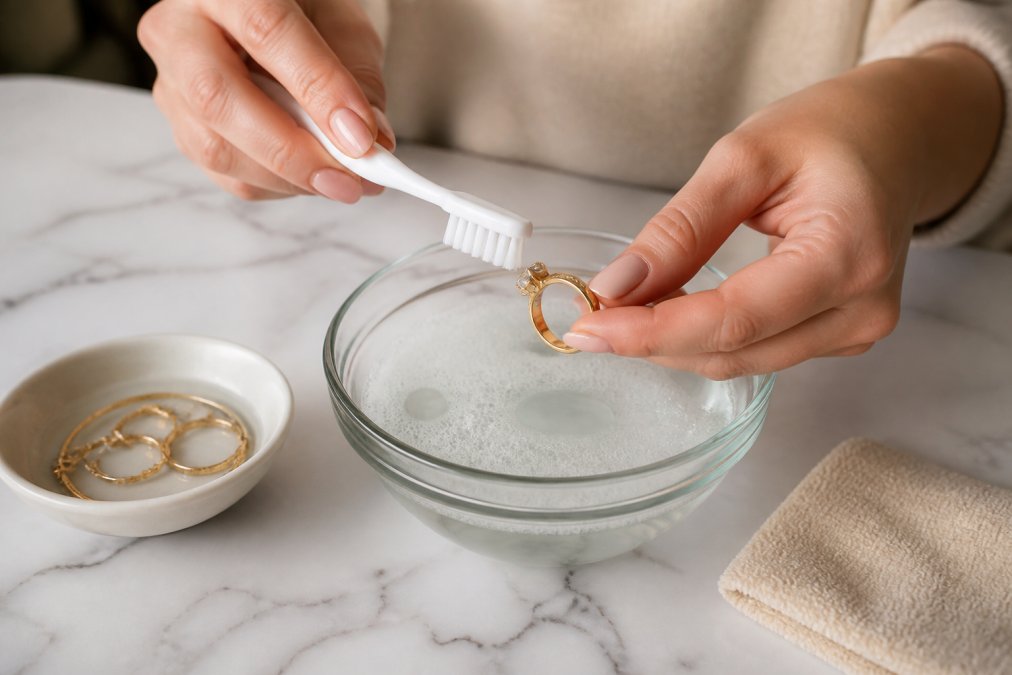
Step 1: Prepare Your Soapy Solution
Fill a small bowl with warm water and add one drop of mild dish soap. Stir until it dissolves. Hot water can loosen adhesive in settings, so keep it lukewarm.
Step 2: Submerge and Soak
Place the piece in the bowl and let it soak for 10 to 15 minutes. Soaking softens the buildup of lotions, oils, and cosmetic residue so you don't have to scrub hard later. For a heavily soiled piece, extend the soak to 20 minutes, but don't leave gold sitting in water overnight.
Step 3: Gentle Scrub and Rinse
Lift the piece out and work the soft-bristled toothbrush into crevices, around prongs, and along any textured surface. Use light pressure. Rinse under warm running water with the drain stopped, or hold the piece over the bowl so a loose stone can't disappear down the drain.
Step 4: Air Dry and Polish
Lay the piece on a soft towel and let it air dry, then buff it with a microfiber cloth. Polishing after drying removes water spots and restores shine without scratching. Store it separately once dry.
The Best Gold Jewelry Cleaning Solution for Artisan Pieces
The best gold jewelry cleaning solution for handcrafted pieces is plain mild dish soap and warm water. It lifts oils and residue without the chemicals that dull hand-finished surfaces. Commercial dips and ammonia-based cleaners are built for speed, not for the patina and texture that artisan work depends on.
What most guides miss is that a "gentle" commercial cleaner can still be too strong for a brushed or matte finish. Ammonia brightens plain gold quickly, but it also strips the subtle surface character that took a jeweler hours to create. If you own a piece with a hand-applied patina, keep it away from anything labeled "dip" or "instant shine."
For pieces you wear daily, a soapy solution every two to three weeks keeps them looking new without risk. American Gem Society guidance on caring for gold jewelry
Cleaning Gold Jewelry with Gemstones: What's Safe
Cleaning gold jewelry with gemstones requires matching the method to the stone, not just the metal. The gold can survive almost anything mild; the stone usually cannot. Two mechanisms drive most damage: porosity (the stone absorbs liquid and discolors from the inside) and thermal or chemical sensitivity (heat, soap, or ammonia attacks the stone's surface or its treatment).
A third factor is unique to handcrafted work: the setting. A bench jeweler who sets a stone by hand may use a bezel, a flush setting, or a channel that grips the stone differently than a mass-produced prong setting. Those settings can trap moisture and residue against the stone, so rinsing and drying matter as much as the cleaning solution itself.
Stone-by-Stone Cleaning Guide
| Stone | Safe Method | Why |
|---|---|---|
| Diamond, sapphire, ruby | Mild soapy water, soft brush | Hard, non-porous, tolerate brief soaking |
| Amethyst, citrine, topaz | Mild soapy water, quick soak only | Heat and prolonged soaking can dull or crack them |
| Emerald | Damp cloth only, no soak | Usually oiled or fracture-filled; soap strips the treatment |
| Opal | Dry or barely damp cloth | Porous; absorbs water and can craze or cloud |
| Pearl | Soft damp cloth, dry immediately | Nacre is soft and reacts to soap, perfume, and acid |
| Turquoise, lapis | Dry cloth only | Porous; soap and water change the color permanently |
| Moonstone, opal, tanzanite | Damp cloth, no soak | Internal inclusions make them heat- and pressure-sensitive |
A heart-shaped pink sapphire set in 14K gold, for example, handles a mild soapy soak without issue, while an emerald pendant needs a drier touch even though the gold around it is durable. The stone decides the method.

Finish Matters as Much as the Stone
Handcrafted gold often carries a matte, brushed, or oxidized finish. Matte and brushed surfaces hold residue in their micro-texture, so a soft brush used gently is the only safe way to lift it, polishing cloths and abrasive pastes will burnish the texture flat. Oxidized (blackened) gold is the opposite problem: the dark patina is a deliberate surface layer, and soap, ammonia, and ultrasonic vibration all strip it. Clean oxidized pieces with a dry soft cloth and spot-clean only the bright gold with a barely damp swab.
Skip toothpaste, baking soda, vinegar, and ammonia on any piece with a stone or a hand-applied finish. These strip treatments, dull porous stones, and remove oxidized patina. The damage is permanent, not something a jeweler can buff out.
If a stone is glued rather than prong-set, skip soaking entirely. Adhesive softens in warm water, and the stone can work loose without you noticing until it's gone. When in doubt, clean only the metal with a damp cloth and leave the gem alone.
American Gem Society guidance on caring for gold jewelry
How Often to Clean Fine Jewelry (and When to Skip It)
How often to clean fine jewelry depends on wear, not the calendar. Pieces worn daily collect lotions, oils, and cosmetic residue fast, so a quick soapy soak every two to three weeks keeps them bright. Pieces worn occasionally need cleaning only when they look dull.
Skip the routine clean when:
- A stone feels loose in its setting
- The piece has visible damage or a bent prong
- You're unsure what the stone is
- The piece has an antique or fragile finish
In those cases, take it to a professional for inspection first. Cleaning a loose stone can send it down the drain.
Ultrasonic Cleaner Risks for Handcrafted Gold
Ultrasonic cleaners are risky for handcrafted gold because the vibration that shakes loose dirt also shakes loose stones. The machine works by generating high-frequency sound waves that create microscopic bubbles in the cleaning solution; those bubbles implode against the jewelry's surface and lift away grime. That same cavitation energy reaches into every crevice, including the space between a stone and its setting.
Here's the part most people don't hear: an ultrasonic cleaner can fracture a stone with internal inclusions, even a durable one. It can also worsen a prong that was already slightly loose. For a handcrafted piece with a one-of-a-kind setting, that risk isn't worth the convenience.
When an Ultrasonic Cleaner Is Actually Safe
An ultrasonic cleaner is reasonable only when all of the following are true:
- The piece is solid gold or platinum with no stones at all
- There are no glued components, inlays, or enamel
- The finish is high-polish, not matte, brushed, or oxidized
- A jeweler has inspected the settings within the last year
If any of those is false, skip the ultrasonic. A handcrafted piece with a bezel-set opal, a channel-set emerald, or a hand-applied patina fails at least one condition every time.
What to Do Instead
For pieces that fail the ultrasonic test, the soapy-water method in this guide is the safe substitute. For a deeper clean than soap can reach, ask a jeweler to steam-clean the piece after inspecting the settings. Steam is gentler than cavitation because it has no mechanical force, it lifts residue with heat and pressure without vibrating the stone. A jeweler can also tighten a loose prong before cleaning, which is the step that makes any deep clean safe in the first place.
Ultrasonic cleaners are a tool for solid metal, not for handcrafted jewelry with stones or surface finishes. If you want an ultrasonic clean, have a jeweler do it, and only after they've inspected the piece.
Common Cleaning Mistakes That Damage Handcrafted Gold
Most damage to handcrafted gold comes from four mistakes, and all four are avoidable. The pattern is the same: too much force, too harsh a chemical, or too little attention to the details that make artisan jewelry different.
| Mistake | What Happens | The Fix |
|---|---|---|
| Using toothpaste or baking soda | Micro-scratches dull the finish | Mild dish soap only |
| Soaking overnight | Adhesive softens, stones loosen | Cap the soak at 20 minutes |
| Scrubbing hard | Prongs bend, texture flattens | Light pressure, soft brush |
| Skipping the rinse | Soap residue attracts more dirt | Rinse in warm water |
The fix for all four is patience. Handcrafted gold rewards a slow, gentle routine, and it punishes shortcuts. A scratch-free finish comes from restraint, not effort.
Conclusion: Protecting Your Handcrafted Gold for Life
Handcrafted gold holds up for decades when you clean it gently and inspect it often. The challenge is that most cleaning advice online is written for mass-produced jewelry, where a harsh scrub does little harm. Artisan pieces carry finishes, settings, and stones that need more care, and the wrong method can undo work that took hours to complete.
That's the standard Benchcraft Bling builds to. Every piece is handcrafted by a master bench jeweler with over 40 years of experience, so the settings and finishes are made to last through daily wear. Our curated collection of lab-grown diamonds and classic gold pieces is designed to mix, match, and move with you, not sit in a box waiting for a special occasion.
Get started with Benchcraft Bling and find handcrafted fine jewelry made to be worn every day, then cared for with the same attention it was made with.
Frequently Asked Questions
What is the best thing to clean gold jewelry with at home?
A mild dish soap mixed with warm water is the safest option for handcrafted gold. Add a few drops to a bowl of warm water, soak the piece for 10-15 minutes, then scrub gently with a soft-bristled toothbrush. Avoid abrasive materials like baking soda or vinegar, which can scratch polished surfaces or strip finishes. For pieces with gemstones, check stone compatibility first. Rinse thoroughly and dry with a lint-free cloth.
Is it safe to use an ultrasonic cleaner on handcrafted gold jewelry?
Not always. Ultrasonic cleaners use high-frequency vibration that can loosen delicate settings or damage certain gemstones. Handcrafted pieces often have unique textures and prong work that may not withstand the vibration. If your piece has soft stones like emeralds, opals, or pearls, skip the ultrasonic entirely. For plain gold bands with no stones, a brief ultrasonic cycle may be fine, but check with a jeweler first.
How often should I clean my artisan-made gold jewelry?
For everyday pieces, a quick soak and gentle scrub every two to four weeks keeps buildup from lotions and oils at bay. Pieces worn less often can be cleaned every two to three months. If you notice dullness or residue, clean sooner. Regular maintenance prevents tarnish and keeps settings secure. Have pieces with stones professionally inspected once a year to check for loose prongs.
Can I use Dawn dish soap to clean gold jewelry?
Yes, Dawn and similar mild dish soaps work well for gold jewelry. They cut through cosmetic residue and oils without harsh chemicals. Use a small amount in warm water, not concentrated soap directly on the metal. Avoid antibacterial or citrus-based formulas, which can be too harsh for delicate settings or certain gemstones. Always rinse thoroughly and dry with a soft cloth.